
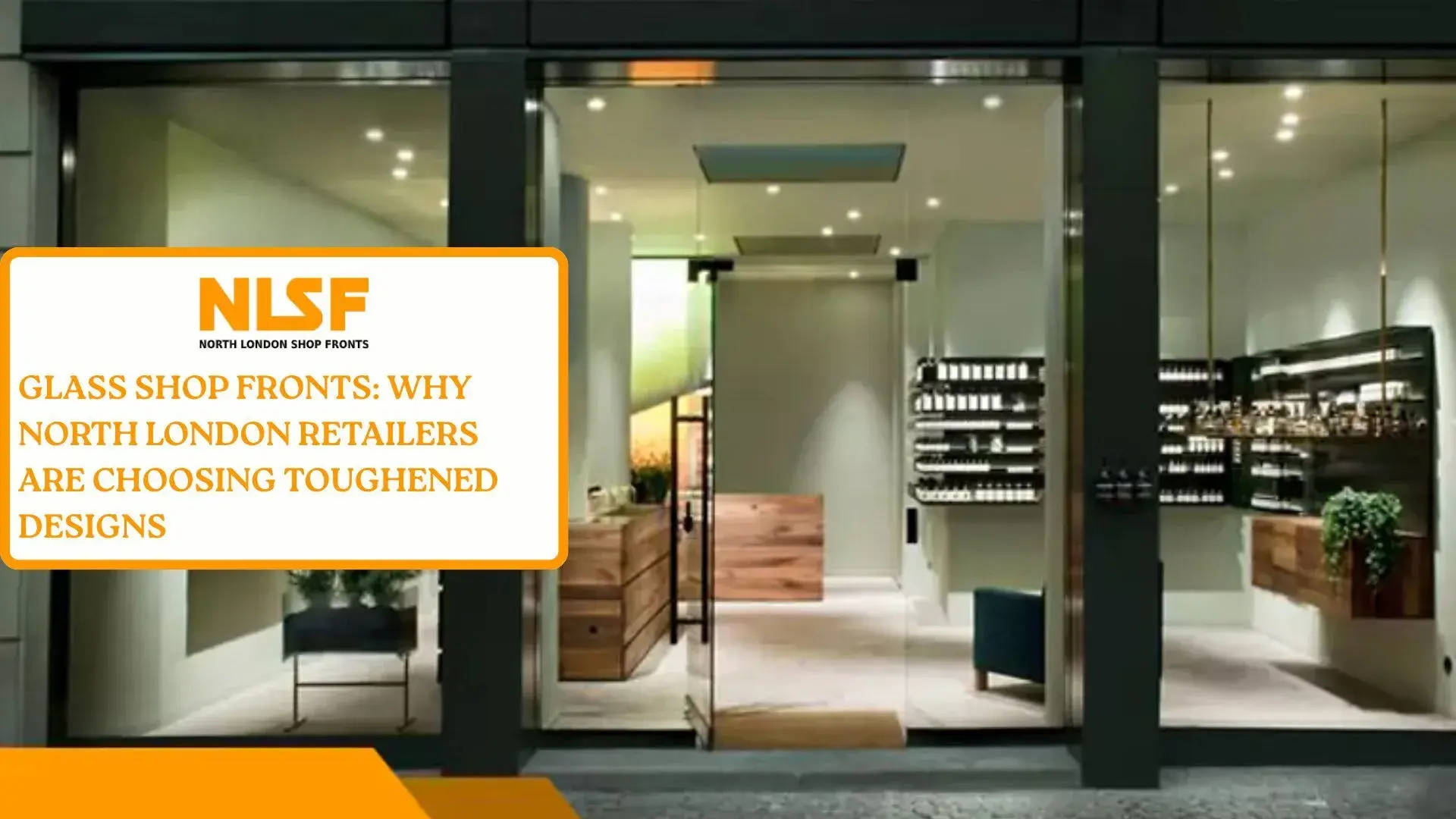
Take a stroll through any bustling high street in North London, be it Muswell Hill, Highgate, Islington, or Crouch End, and the change is plain to see. Solid fascias are being replaced by open-fronts that let the daylight in and encourage potential customers to enter rather than discourage them. This development has an obvious commercial rationale, in that a well-designed glass shop front not only looks good but works hard as well.
First Impressions Are Built in Three Seconds
Retail psychologists know that even before a shopper enters a store, there is already a decision made before reaching the entrance. Sunlight, visibility of products, and openness are some of the factors that help decide whether or not a passer-by would become a client. The transparency of a shopfront puts the power in the hands of the retailer in the moment when the decision is made.
For North London’s independent retailers in particular, where character and aesthetic distinctiveness matter enormously to local shoppers, the visual quality of a glass front can be a genuine competitive advantage over chain retailers who prioritise uniformity over personality.
Why Toughened Glass Has Become the Industry Standard?
Not all type of glass is equal, and any conversation about commercial frontage glazing quickly arrives at the same conclusion: toughened glass is not an optional upgrade, it is the baseline specification for any serious retail installation.
Toughened glass shop fronts are subjected to a thermal tempering process that increases their strength to approximately five times that of standard float glass of equivalent thickness. When broken, whether by accidental impact, attempted forced entry, or thermal stress, toughened glass fractures into small and relatively harmless granules rather than the sharp, dangerous shards that standard glass produces. This matters enormously both for public safety and for insurance purposes.
Beyond safety, toughened glass shop fronts offer practical performance advantages that accumulate over the lifetime of the installation. They resist scratching better, withstand the thermal cycling caused by London’s variable weather conditions, and perform significantly better under the wind loads that affect exposed North London high street locations. For a retailer making a long-term investment in their frontage, toughened glass is simply the economically rational choice.
Overnight Security Without Sacrificing the Aesthetic
One of the most common concerns retailers raise when specifying a glass shop front is overnight security, and it is a legitimate one. Modern shop front shutters are designed specifically to complement glass frontages rather than contradict them.
Internally fitted shop front shutters, housed within a compact barrel concealed above the glazing line, are virtually invisible during trading hours, preserving the clean lines of the glass front entirely. Used throughout the night, they offer an effective form of physical protection without any visible obstruction. With perforated or vision-slat shuttering, light can come in, which prevents the space from being completely dark, thereby discouraging vandals.
What Retailers in North London Are Actually Asking For?
Spend time with North London retailers currently refitting their shopfront and a consistent set of priorities emerges. They want maximum glazed area to maximise natural light and display space. They want thermal performance, double-glazed or thermally broken framing systems that reduce heating costs in winter. They want low-maintenance materials that hold up against urban pollution without constant upkeep, and they want a shopfront that photographs well, because for independent retailers in 2026, the shop front is also social media content.
North London’s retail landscape rewards businesses that invest in how they present themselves to the street. Toughened glass shop fronts have become the preferred choice not because they are fashionable but because they are functional, durable, safe, and commercially effective in a way that other shopfronts solutions simply are not. Paired with discreetly integrated shop front shutters and specified by an installer who understands the character of North London’s varied commercial streets, a glass shop front is one of the most impactful investments an independent retailer can make.
Frequently Asked Questions (FAQs)
Why is toughened glass preferred over standard glass for shop fronts?
Toughened glass is around five times stronger than standard glass and breaks into safe granules rather than dangerous shards, making it the required specification for most commercial frontages.
Can shop front shutters be fitted to an existing glass frontage?
Yes, though integrating shutters during the original installation produces a cleaner result; retrofitting is possible but may involve more visible external boxing.
Do glass shop fronts in North London require planning permission?
It depends on the location, conservation areas and listed buildings in boroughs often have specific requirements, always consult your local planning authority before proceeding.
How long does a glass shop front installation typically take?
Most standard single-frontage installations are completed within one to two days, minimising disruption to trading.
Are thermally broken frames worth the additional cost for a glass shop front?
For most North London retailers, yes, thermally broken aluminium framing significantly reduces heat loss, lowering energy bills enough over time to offset the modest additional upfront cost.